
A marble column may be immovable. A heritage façade untouchable. But that doesn’t mean heritage hotels can’t improve their performance. The teams behind Kimpton Margot Sydney and The Grace Hotel Sydney have used NABERS to focus investment where it can make the greatest difference without compromising character and charm.
Improving the efficiency of buildings usually starts with what can be changed. Replace the glazing. Upgrade the façade. Install new services. Optimise the building from the ground up.
But heritage hotels don’t have that luxury. Many of the decisions that shape their performance today were made decades before anyone talked about net zero, operational emissions or energy ratings.
Some heritage hotels began life as office buildings. Others as department stores or warehouses. Few started life as hospitality venues – and their most distinctive features are often the very things that cannot be altered.
When options are limited, every intervention matters. Owners must understand exactly how their building performs and which improvements will deliver the greatest benefit. That’s where NABERS comes in.
Fast facts
Rooms with ratings: 31,410 guest rooms certified by NABERS Energy in 2025
Australian Government procurement: Australian Government travellers must consider the environment when booking travel since July 2024. This includes consideration of the NABERS Energy for Hotels rating.
Industry benchmarking: 5 hotel portfolios participated in the 2025 NABERS Sustainable Portfolio Index.
Travel platforms: NABERS ratings can be displayed on Google travel, Expedia and Booking.com.
Old bones, new benchmarks
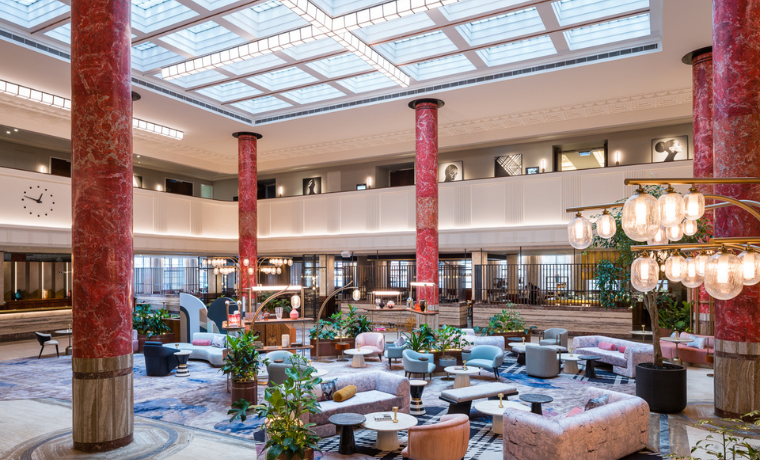
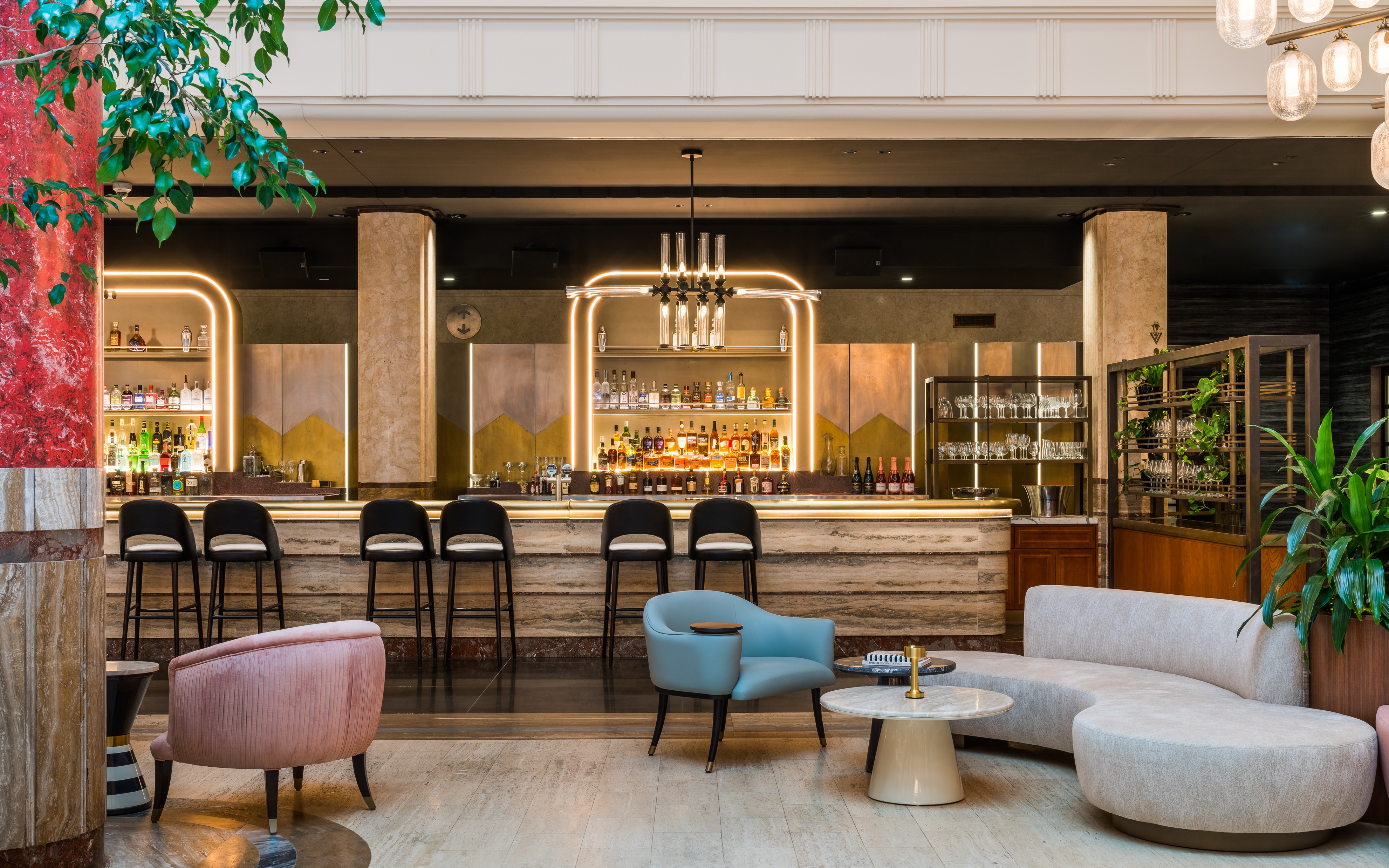
Kimpton Margot Sydney, occupying the former Sydney Water Board headquarters on Pitt Street, is a landmark Art Deco building completed in 1939. Repositioned by Pro-invest Group as Australia’s first Kimpton hotel, Kimpton Margot Sydney boasts original marble columns, terrazzo floors and decorative detailing that contribute to its state heritage listing.
It is a remarkable building, but Kimpton Margot Sydney was not designed to meet modern energy efficiency expectations. Multiple entrances, expansive public spaces and heritage-protected building fabric all influence how the hotel performs today.
Guided by its One Earth, Countless Experiences sustainability strategy, Pro-invest Group uses NABERS ratings across its portfolio as a tool for continuous improvement. Kimpton Margot Sydney currently holds 3.5-star NABERS Energy and 3.5-star NABERS Water ratings. The hotel is operated by EVT Connect Hospitality.
“It is harder to achieve a high NABERS rating in a heritage building. But that shouldn’t deter people,” says Anthony Ursino, Pro-invest Group’s Chief Operating Officer and General Counsel.
“Our approach to sustainability at Kimpton Margot Sydney is the same as it is for all our other assets: understand how it performs today and then look for opportunities to improve that performance over time.”
The NABERS assessment process identified a range of practical opportunities, Anthony adds, from smarter control of air conditioning systems and better maintenance of refrigeration equipment to more frequent cleaning of guest room air conditioning filters.
Just as the old safe became a cocktail bar, rather than being ripped out, improving Kimpton Margot Sydney’s energy and water performance is about working with the building’s heritage. Take the energy efficient LEDs, which wrap around the existing red marble columns and transform them into one of the hotel’s defining architectural features.
Kimpton Margot Sydney also achieved Green Key certification for a second consecutive year in 2026. Green Key is a global sustainability certification developed specifically for the tourism and hospitality sector and complements NABERS by recognising broader sustainability practices, policies and management systems that sit behind building performance.
“The first step in any building’s sustainability journey is to understand how it performs. Once you measure it, you can benchmark it. Once you benchmark it, you can improve it. NABERS helps us do that.”
Playing the long game
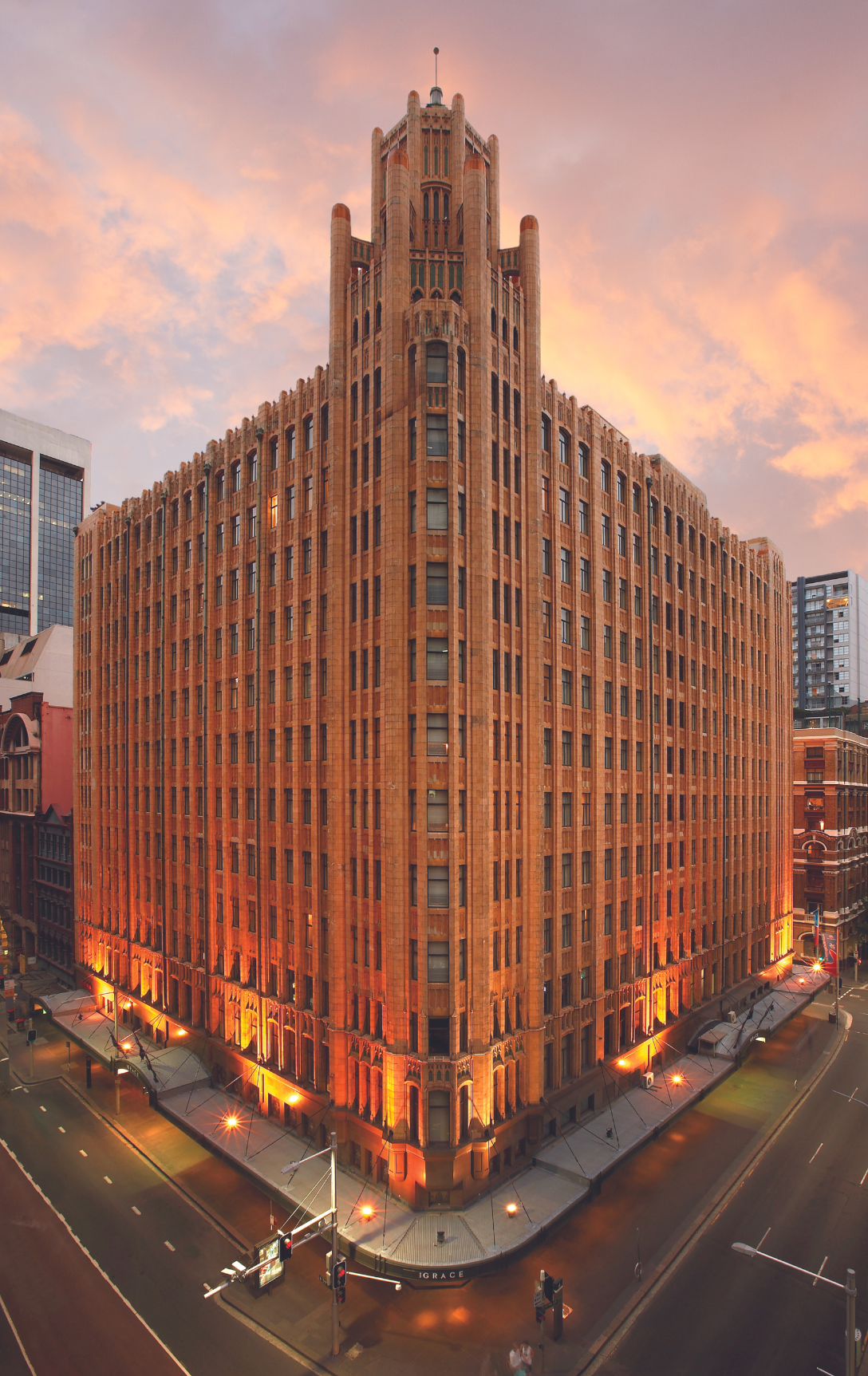
The Grace Hotel Sydney was completed in 1930 as the headquarters of the Grace Bros retail empire. Inspired by Chicago's Tribune Tower, The Grace has served as commercial offices, military headquarters during World War II and, since 1997, one of Sydney’s best-known hotels. Its neo-Gothic-inspired façade, marble floors, decorative ironwork and soaring public spaces remain defining features of the guest experience today.
Like Kimpton Margot Sydney, The Grace Hotel was built in a different era. For the hotel’s Chief Engineer Andrew Yap, that reality makes continuous improvement essential.
The Grace Hotel received a 3.5 star NABERS Energy rating in 2011 and has used the program as a roadmap for performance improvement ever since – with its most recent NABERS Energy rating an impressive 5.0 stars.
Andrew describes the NABERS rating process as both a benchmark and a business case tool.
“When we first rated with NABERS, the building consumed too much energy. NABERS gives us insights on where we could improve – and each year I use those insights to build a business case for capital investment. Step by step, we’ve worked through the NABERS recommendations to make improvements.”
Over nearly two decades, those improvements have included replacing chillers, cooling towers and pumps, installing variable speed drives, upgrading lighting systems and refining building controls. Rather than relying on a single major project, Andrew’s team has focused on a steady program of upgrades.
Andrew’s lesson is straightforward and similar to Anthony’s: heritage constraints should not be viewed as barriers to sustainability. “You don’t have to do everything at once. The important thing is to start and keep improving.”
“I use NABERS to get things done. It is our action plan that helps us save more money on energy costs every year.”
Kimpton Margot Sydney
- 18.8% reduction in energy use per occupied room over three years
- 15 practical energy conservation opportunities identified through the NABERS assessment process.
The Grace Sydney
- 5-star NABERS Energy rating achieved in 2024, up from 4.5 stars in 2022
- 11% renewable electricity incorporated into hotel operations.
Conserving character, cutting carbon
Heritage hotel owners have always understood the value of preserving history. Increasingly, there is a sustainability case for doing so too.
According to the Update to the Trajectory for Low Energy Buildings, Australia’s buildings account for 49% of national electricity-related emissions. Embodied carbon contributes a further 8% to Australia’s total emissions footprint.
One of the most effective ways to reduce those emissions is to preserve the buildings we already have. The Global Alliance for Buildings and Construction has found that renovating existing buildings can generate 50–75% fewer greenhouse gas emissions than new construction by retaining the carbon already locked into their structure.
The Kimpton Margot Sydney and The Grace Hotel Sydney demonstrate that heritage and sustainability can comfortably coexist. With the right information and investment, historic hotels can continue to tell their stories while contributing to a low-carbon future.
Six forces reshaping hotel sustainability
A growing number of policies, procurement requirements and market signals are encouraging hotel owners to measure their operational performance with NABERS.
- Government procurement: The Australian Government's Net Zero in Government Operations Strategy requires Commonwealth employees to consider environmental performance when booking accommodation. Since 1 July 2024, Australian Government travellers must consider the NABERS Energy ratings of hotels, helping direct travel spending towards more energy-efficient accommodation providers.
- Planning requirements: The NSW Sustainable Buildings SEPP introduced minimum sustainability requirements in 2023. New hotels and major refurbishments with 100 or more rooms must achieve minimum 4-star NABERS Energy and 3-star NABERS Water ratings.
- Mandatory disclosure on the horizon: The national Commercial Building Disclosure (CBD) Program already requires office buildings to disclose energy performance when offered for sale or lease. The policy roadmap for the program’s expansion includes disclosure requirements for hotels before 2030.
- Greater visibility for travellers: Hotels with public NABERS ratings can display their certification on travel booking websites, including Google travel, Expedia and Booking.com, . NABERS is also recognised through partnerships with tourism certification schemes including EarthCheck, Ecotourism Australia and Green Key.
- Investor and lender expectations: Banks, valuers and institutional investors are paying closer attention to operational performance. NABERS ratings provide an independently verified benchmark that can support green finance initiatives, asset valuation and reporting.
- Industry benchmarking: The NABERS Sustainable Portfolio Index (SPI) now includes hotel portfolios, allowing owners to benchmark performance against industry peers. In 2026, participating hotel groups included Pro-invest Group, CapitaLand and Schwartz Family Company.